Niacinamide is in almost everything and explained by almost nobody. It has become the ingredient brands add so the label has something on it.
Which is a shame, because it is genuinely one of the more useful things you can put on your face — as long as you know what you are asking of it.
What it is
Niacinamide is a form of vitamin B3. In skincare it is used to support the skin's barrier — the outer layer that holds water in and keeps irritants out.
That is the whole mechanism, and everything reasonable claimed for it follows from that one idea. It is not an exfoliant, not an acid, and not doing anything dramatic.
What it is reasonable to expect
- The appearance of a more even tone, over months rather than weeks.
- Less of that tight, easily-irritated feeling, particularly if your barrier has been having a hard time.
- The look of smaller pores — the appearance, through improved surface texture. Pore size itself is largely inherited and does not change.
- Skin that copes better with other actives. This is the underrated one. People who tolerate retinol well are often people whose barrier was in reasonable shape first.
What it will not do
It will not deliver a visible transformation in a fortnight, and it will not do anything you would photograph. If a product's entire promise rests on niacinamide and the before-and-after is dramatic, something other than the niacinamide is being credited.
It is also not a substitute for sun protection, which — tediously, and for the fifteenth time on this Journal — remains the part that decides the outcome.
Why it suits people other actives don't
This is the real argument for it. Niacinamide is water-soluble, works at a skin-friendly pH, and is unusually well tolerated. It does not have an adjustment period. There is no purging phase, no peeling week three, no building up slowly.
For anyone who has tried vitamin C and found it stings, or who has abandoned retinol twice, it is the sensible next thing to try — not because it does more, but because you will still be using it in six months.
The combining question
The most persistent myth in the category is that niacinamide and vitamin C cannot be used together. They can. We have written about where that myth came from and why it does not apply to anything you would actually buy.
It also sits happily alongside retinol, and is often the thing that makes retinol tolerable rather than a competitor to it.
How to use it
After cleansing, before heavier textures. Morning or night; it is not light-sensitive in the way vitamin C and vitamin A are, so it is genuinely flexible.
Give it twelve weeks before judging. It is a slow, cumulative, unglamorous ingredient, and that is the case for it rather than against it.
Related reading
- Niacinamide percentages, and the flushing myth
- Can you use niacinamide and vitamin C together?
- How to tell if your cleanser is stripping your skin
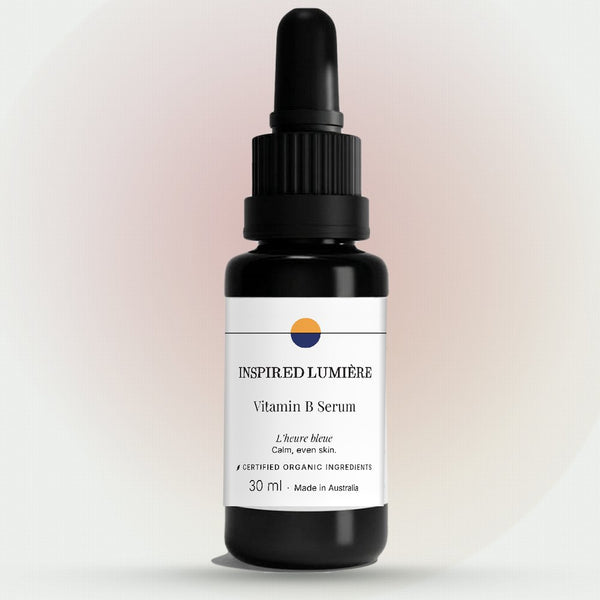
Ours is the Lumière Vitamin B Serum, at 5%. The Radiance Vitamin C Serum is the one people usually pair it with.
This article is general information, not personal advice. If you have a skin condition or take prescribed medication, talk to your GP or dermatologist.