Retinol is the most evidence-backed ingredient you can buy without a prescription. It is also the one most likely to end up abandoned in a drawer after a fortnight.
Those two facts are related. Almost everyone who gives up on retinol gives up during the window where it is behaving exactly as expected. Nobody told them what expected looked like, so they read normal as wrong.
Here is the honest timeline.
Weeks one and two: nothing, then something
The first few nights are usually uneventful. This catches people out — they were braced for drama, got none, and concluded the product was weak. It isn't. Vitamin A works by changing how quickly skin cells turn over, and that process takes longer than your patience does.
Somewhere around night four to ten, the first real sign arrives: a slight tightness, a faint roughness across the cheeks or forehead, perhaps some flaking around the nose. That is turnover speeding up. It is the ingredient working, not failing.
Weeks three and four: the worst of it
This is where the drawer happens.
Skin can look drier, feel rougher, and go a little red at the edges. Makeup sits worse. Some people get small bumps in the areas they usually get congestion — that is the turnover bringing things to the surface faster than they would have arrived on their own. It looks alarming and it is worth knowing the difference between that and a genuine reaction, which we cover in purging or a reaction.
The instinct at this point is either to stop, or to attack it with exfoliants. Both are wrong. What actually helps is doing less: keep the retinol, drop everything else that is active, and moisturise more than feels necessary.
Weeks five and six: it settles
The flaking eases. Skin stops feeling like it belongs to someone else. This is usually where people first notice texture — not brightness, not lines, texture. Things feel smoother than they did.
It is also where the temptation is to increase the frequency. Resist for another fortnight. Tolerance is built by consistency, not by escalation.
Weeks seven and eight: the first honest look
Eight weeks is roughly when a photograph becomes worth taking. Tone looks more even. Fine lines look softer — softer, not gone. If you are expecting the before-and-after you saw in an ad, you will be disappointed, and you were always going to be.
Retinol's real returns arrive somewhere in months six to twenty-four. Eight weeks is simply where you find out whether you can live with it.
How to make eight weeks survivable
- Start twice a week. Not nightly. Twice a week for a fortnight, three times for a fortnight, then most nights if your skin is happy.
- Pea-sized, on dry skin. Damp skin absorbs more and irritates faster. Wait ten minutes after cleansing.
- Moisturiser afterwards, generously. Some people prefer to buffer — moisturiser first, retinol over the top. Slightly less potent, considerably more tolerable.
- Nothing else active on retinol nights. No acids, no scrubs, no vitamin C. One thing at a time.
- Sunscreen every morning, without exception. Not optional with retinol, and in Australia it is the part that genuinely decides the outcome. More on retinol and the Australian sun.
Who should wait
If you are pregnant or breastfeeding, vitamin A is one to skip — speak to your GP or midwife rather than taking a brand's word for it. If you already use a prescription vitamin A product, adding another is not additive, it is just more irritation. And if your skin is currently unhappy — windburn, sunburn, mid-reaction to something else — wait until it has calmed down.
Related reading
- Retinol purging or a reaction? How to tell the difference
- Retinol percentages: what the number on the bottle means
- Retinol or vitamin C: do you actually need both?
- The order to apply skincare, and why most of it doesn't matter
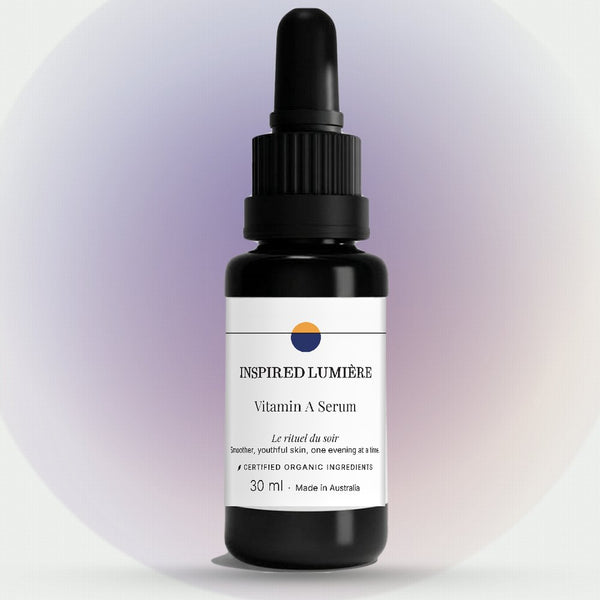
Ours is the Night Vitamin A Serum.
This article is general information, not personal advice. If you have a skin condition or take prescribed medication, talk to your GP or dermatologist.