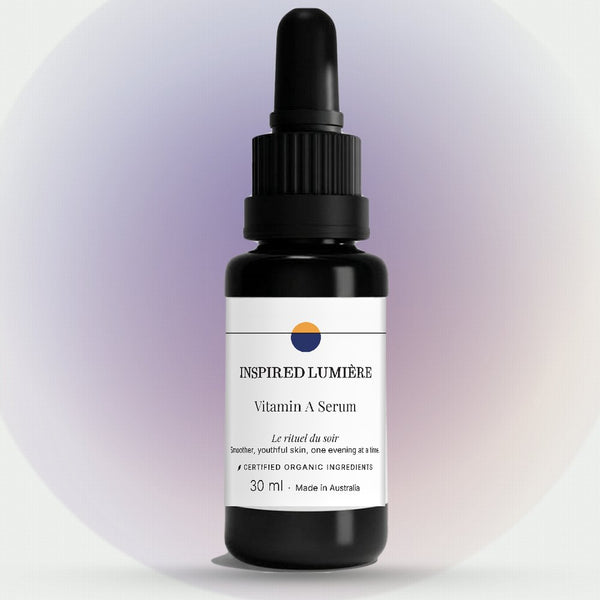
Every retinol product tells you to use it at night and wear sunscreen. Almost none tell you why, and the two reasons are different things that get muddled into a single warning.
Reason one: the ingredient is fragile
Vitamin A derivatives break down in UV light. That is about protecting the product, not you — it is why retinol comes in opaque bottles and why the night instruction exists at all. Same principle as vitamin C going orange, different chemistry.
The practical consequence is dull and worth doing: keep the bottle in a drawer, not on a windowsill. In North Queensland, a bathroom shelf in summer is a slow oven.
Reason two: your skin is temporarily more sun-sensitive
This one is about you. Faster cell turnover means the outer layer is newer than it was, and newer skin burns more easily.
The effect is real but modest and temporary. It is most pronounced in the first weeks and eases as your skin adjusts. It is not a reason to avoid retinol. It is a reason to be genuinely serious about the morning.
Why this matters more here
Australia's UV index routinely reaches 12 to 14 in summer. Most of the world's retinol advice is written where 8 counts as a hot day. Guidance calibrated for a European spring under-prepares you for a Queensland October.
The blunt version: if you are using retinol and skipping sunscreen, you are running the ingredient's downside without its upside. Most of what people call ageing skin is cumulative UV exposure, and no night serum outruns it. That is not modesty about the product — it is the single most reliable finding in the field.
What to actually do
- Retinol at night, always. Not for mystical reasons — the ingredient degrades, and there is no benefit to a daytime application.
- SPF50+ every morning you will be outside, reapplied if you are out for hours. Australian sunscreens are regulated as therapeutic goods rather than cosmetics, which is a genuine consumer advantage.
- A hat and shade still beat anything in a bottle. Nobody selling skincare enjoys writing that sentence.
- Ease off before a beach holiday rather than starting a new strength the week of it.
- Store the bottle in a drawer.
The seasonal question
People ask whether to stop retinol over an Australian summer. Generally, no. Stopping and restarting means going through the adjustment period twice, which is a poor trade for a few months of convenience.
Reducing the frequency through the hottest months and being rigorous in the morning is the better version. There is more on what genuinely changes in an Australian summer, most of which has nothing to do with buying more products.
Related reading
- Starting retinol: what the first eight weeks actually look like
- Retinol percentages: what the number on the bottle means
- Why sunlight ages skin faster than time does
Ours is the Night Vitamin A Serum.
This article is general information, not personal advice. If you have a skin condition or take prescribed medication, talk to your GP or dermatologist.