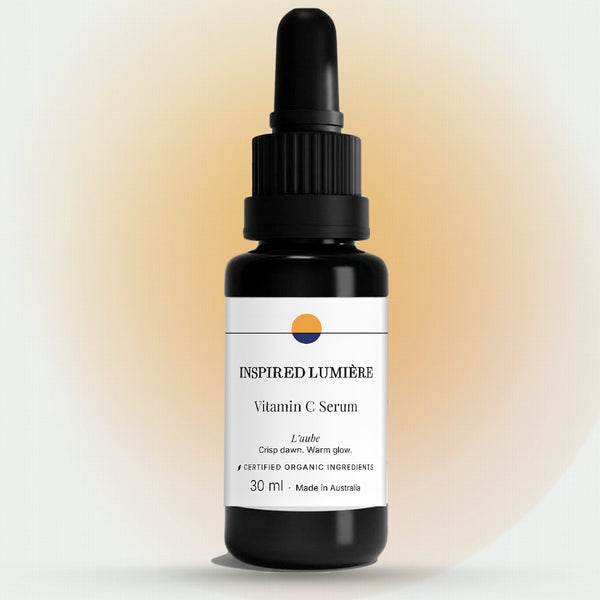
You bought it pale. It's now the colour of weak cordial. Somewhere online, someone has told you this is normal and fine.
It isn't fine. Here's what's happening.
The colour is a clock
Vitamin C in its most common form is ascorbic acid, and ascorbic acid is unstable. Exposed to air, light and warmth, it oxidises into a compound called dehydroascorbic acid. That compound is what gives the serum its yellow, then amber, then brown cast.
So the colour isn't a cosmetic quirk. It's a readout of how much of the active ingredient has already converted into something that no longer does the job you paid for.
Should you throw it out?
Depends how far gone it is.
- Still pale straw or very light yellow. Fine. Most serums develop a faint tint within weeks and it doesn't mean much.
- Properly yellow, heading towards amber. Losing potency. Still safe to use, but you're applying something noticeably weaker than what you bought. Finish it, don't restock the same way.
- Orange or brown. Spent. Some people report it stains a pillowcase or a light-coloured towel at this stage, which is a good sign you should stop.
It won't hurt you. It just isn't doing much.
Why it happened faster than it should have
Three things, and two of them are about where you keep it.
Light. A bathroom windowsill is close to the worst place in an Australian house for a serum. If the bottle is clear glass and it sits somewhere bright, you've halved its life.
Air. Every time the dropper comes out, oxygen goes in. A pipette bottle that you open twice a day for three months has had a lot of air through it.
Heat. A Queensland bathroom in February is not a stable environment. Neither is a car.
What to do differently
Nothing clever. Keep the lid on properly, keep the bottle in a drawer rather than on the bench, and don't buy a bigger bottle than you'll get through in three or four months. A 30ml bottle used daily is about right. A 100ml bargain bottle will be brown before you finish it, which makes it not much of a bargain.
If you want to be thorough, a bedroom drawer beats a bathroom cupboard. Bathrooms swing between hot and humid several times a day.
The part brands don't advertise
Some serums are formulated to be more stable than others — different forms of vitamin C, added ferulic acid or vitamin E, opaque or airless packaging. These genuinely help.
But no formulation makes it immortal, and a brand telling you their serum "never oxidises" is telling you something about their honesty rather than their chemistry.
Ours arrives pale. If yours has gone orange, it's finished, and we'd rather you knew that than kept applying it hopefully for another two months.
General information, not personal advice.