0.3%. 0.5%. 1%. The numbers look like a spec sheet, and they get used like one — bigger number, better product, more money.
It is one of the least useful pieces of information on the bottle.
Why the number tells you less than you think
It is not a standard. Retinol, retinaldehyde, retinyl palmitate and prescription tretinoin are all vitamin A derivatives, and they are nowhere near equivalent at the same percentage. Retinyl palmitate at 1% is far gentler than retinol at 0.3%, because it takes more conversion steps in the skin before it does anything. A percentage without the form named alongside it is close to meaningless.
Formulation changes the outcome. The same percentage in a well-buffered cream and in a thin, alcohol-heavy serum will behave completely differently on your face. Delivery matters as much as dose.
Stability is not disclosed. A bottle labelled 1% contained 1% on the day it was made. What it contains after six months on a shop shelf under fluorescent light is not on the label, and nobody is obliged to tell you.
What the numbers roughly correspond to
- Around 0.1% to 0.3% retinol — a sensible starting point for most people who have not used vitamin A before.
- Around 0.5% — a reasonable step up once you have been consistent for a few months and your skin is comfortable.
- 1% and above — meaningfully more irritating, and the returns are not proportional to the increase. Plenty of long-term users never go here and have no reason to.
- Prescription retinoids — a different category entirely, from a doctor, with a different risk profile and different supervision.
The rule that actually predicts results
Frequency beats strength.
A low percentage used four nights a week for a year will do more than a high percentage used until you gave up in week three. That is not a consolation prize for the cautious — it is the finding that keeps turning up, and it has an obvious implication: the right strength is the one you will still be using in six months.
Which makes the honest way to choose a lot less exciting than the marketing. Pick the version you can tolerate through the first eight weeks without quitting.
What to look at instead of the number
- The form of vitamin A, named in the ingredient list.
- The packaging — opaque, airless, or at minimum a tinted bottle with a tight lid.
- Whether the formula includes anything soothing alongside, rather than the active on its own.
- Whether the brand tells you how to start, or simply sells you the strongest thing in stock.
A note on how these get marketed
Percentages are sold as strength because a number is easy to print on a box and easy to compare at a glance. It is the same instinct that produced "clinical-grade": the appearance of specification, doing the work of evidence.
A brand that leads with the percentage and says nothing about the form, the packaging or how to build up to it is telling you what it thinks you will check.
Related reading
- Starting retinol: what the first eight weeks actually look like
- Retinol purging or a reaction? How to tell the difference
- What "clinical-grade" actually means in skincare
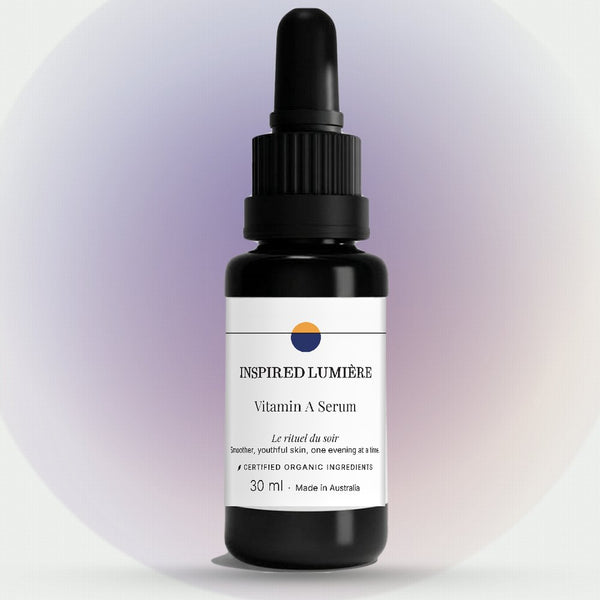
Ours is the Night Vitamin A Serum.
This article is general information, not personal advice. If you have a skin condition or take prescribed medication, talk to your GP or dermatologist.