Most skincare is designed to be kept somewhere sensible: room temperature, out of direct sun, lid on. In much of Australia, from about now until March, "room temperature" is a generous description of a bathroom.
Heat doesn't make most products dangerous. It makes some of them stop doing their job sooner, and it does it quietly.
What heat and light actually do
Chemical reactions run faster in warmth. For most of what's in a moisturiser — water, oils, thickeners — that barely matters over a normal life on the shelf. For the fragile ingredients, it matters a great deal.
- L-ascorbic acid, the most common form of vitamin C, reacts with air and light, and heat speeds that up. The orange or brown colour is the visible part of it. We covered that in why your vitamin C serum turned orange, and the steadier alternatives in the forms of vitamin C.
- Retinol degrades in light and air, which is the chemistry half of why it goes on at night. Warmth doesn't help.
- Plant oils oxidise and eventually go rancid. Rosehip is one of the quicker ones, and warmth hurries all of them along.
- Creams and lotions are oil and water held together. Cook and cool them often enough and some will thin out or separate.
The worst places to keep it
- The car. Never. A parked car in a Queensland summer gets far hotter than any skincare is designed for, and the glovebox is no refuge. If there's a sunscreen living in the car for emergencies, replace it more often than you think.
- The bathroom windowsill. Direct sun through glass, every morning, on the same bottles. It's the most common spot in the house and the worst one.
- The beach bag. Fine for the sunscreen you're using that day. Not where your serum should live.
- Beside the shower, or above the kettle. Steam and heat, twice a day, every day.
A drawer or a cabinet out of the sun does most of the work. In Far North Queensland, where we are, a bedroom drawer is often cooler than anywhere in the bathroom.
The fridge question
You don't need to refrigerate skincare, but it does no harm to most of it. A fridge door is dark, steady and cool, and an eye gel kept there feels very good on a hot morning. Two cautions: some creams and oils thicken or turn cloudy in the cold, which is harmless but annoying, and nothing should be frozen. Freezing can split a cream for good.
Small habits that help
- Lids and caps back on straight away. Air is half the problem for the fragile ingredients.
- Keep droppers off your skin. Drip onto your fingertips, not straight onto your face, so the dropper doesn't carry anything back into the bottle.
- Never add water to loosen or stretch a product. You're diluting its preservative and feeding whatever gets in.
- Don't decant into travel pots unless they're properly clean and dry.
The open-jar symbol, and why there's often no expiry date
Australian law doesn't require an expiry date on cosmetics. Plenty of skincare sold here doesn't carry one, and that isn't a loophole being exploited — it simply isn't required.
What you'll often see instead is a small drawing of an open jar with a number and an "M": 6M, 12M, 24M. It's a European convention, and it's the number of months the manufacturer expects the product to stay good once it's opened. The clock starts on the day you open it, not the day you bought it, so it's worth writing the month on the bottle.
Sunscreen is the exception. In Australia it's a therapeutic good rather than a cosmetic, and it must carry an expiry date. Take that date seriously, particularly for a bottle that has spent a summer in a hot car.
Where there's no date and no symbol, a cautious rule of thumb some chemists give is to use opened products within about six months, and unopened ones within about three years. That's conservative for plenty of products, but it's a fair default when you have nothing else to go on.
How to tell a product has turned
- The smell has changed — sharper, sour, or like old crayons, which is often an oil going rancid.
- The colour has changed — darker or yellower, or brown for an L-ascorbic acid serum.
- The texture has changed — separated, watery, grainy or lumpy where it used to be smooth.
- It stings where it never did, on skin that's otherwise behaving.
Any one of those and it's done. A product that has turned isn't worth finishing for the sake of the money already spent.
Related reading
- Why your vitamin C serum turned orange — and whether to bin it
- Skincare for an Australian summer: what actually changes
- The forms of vitamin C, and why the name on the label matters
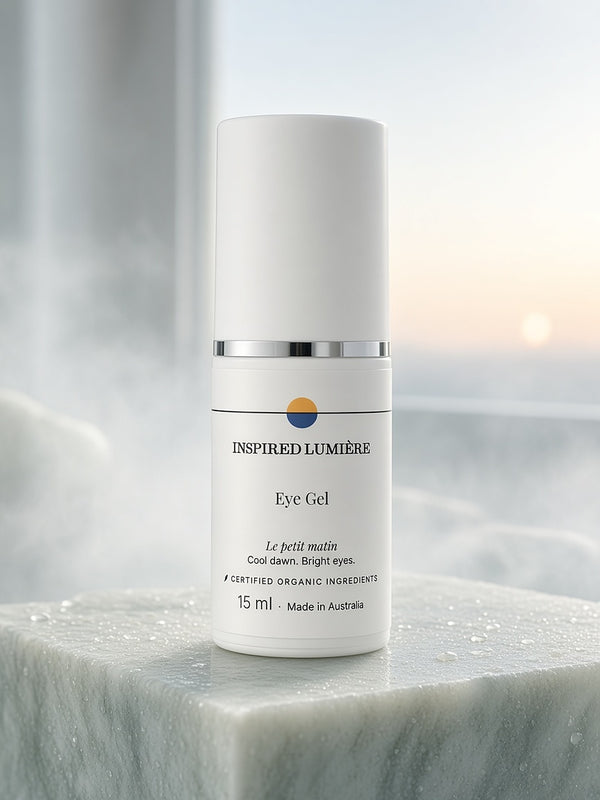
Our Lumière Eye Gel is the one of ours that asks to be stored below 30°C, which in a Queensland bathroom means out of the window.
This article is general information, not personal advice. If you have a skin condition or take prescribed medication, talk to your GP or dermatologist.