Most people choose between an eye gel and an eye cream on texture preference, then conclude that eye products do nothing. The two are built around different problems, and the mismatch explains a good deal of the disappointment.
Why the eye area is different at all
The skin around your eyes is thinner than the skin on your cheeks — noticeably so. It has fewer oil glands, which means it holds water less well and dries out sooner. And it moves constantly: blinking, squinting, every expression you make. In Australia, add a lifetime of squinting into glare, which is its own kind of wear.
That combination is why the area shows dryness and fine lines before the rest of the face does. Treating it differently is not vanity; it genuinely behaves differently.
What a gel is for
Gels are water-based and largely oil-free. They absorb fast, sit flat, and feel cool going on.
That suits:
- Morning use, where anything rich will move around under makeup or sunscreen.
- The look of puffiness, particularly first thing.
- Warm and humid climates, where a heavy cream feels like too much by 9am.
- Skin that is oily elsewhere on the face, or prone to small bumps around the eye.
The cool sensation is mostly water evaporating, not an active doing something clever. It is pleasant, and it is more honest to say it is pleasant than to dress it up as therapy.
What a cream is for
Creams carry oils and occlusives. They sit longer, absorb more slowly, and hold water in rather than delivering it.
That suits:
- Night use.
- Genuinely dry or crepey-feeling skin around the eye.
- Cold, dry, or heavily air-conditioned environments.
- Anyone using a vitamin A product nearby who needs more cushioning.
The straightforward answer
Gel in the morning, cream at night, if you want both and enjoy the ritual. If you want one: choose for your climate and your skin, not for the price. In most of Australia, most of the year, a gel is the more usable of the two.
Two things that apply either way
Use far less than you think. A grain of rice for both eyes. More does not do more — it migrates into your eyes overnight and then gets blamed on the product.
Apply on the orbital bone, not the lid. Ring finger, patted rather than rubbed, along the bone under the eye and out towards the temple. Whatever you apply will spread inwards on its own.
And one thing worth being honest about
No topical product changes the structure of the area — the hollowing that comes with time, or the shadow cast by bone. That is covered properly in what an eye product can and can't do about dark circles, because it is the single biggest gap between what this category promises and what it delivers.
Related reading
- Dark circles: what an eye product can and can't do
- Hyaluronic acid in a dry climate: the mistake that backfires
- The order to apply skincare, and why most of it doesn't matter
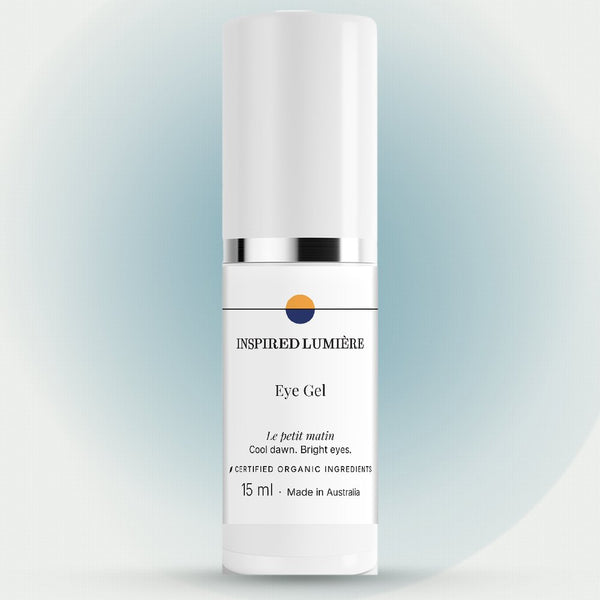
Ours is the Lumière Eye Gel.
This article is general information, not personal advice. If you have a skin condition or take prescribed medication, talk to your GP or dermatologist.