Dark circles are the most-promised and least-delivered result in skincare. That is not because the products are all bad. It is because three different things share one name, and only one of them is meaningfully affected by anything in a jar.
The three kinds
Pigment. Actual colour in the skin — often brownish, and frequently just how someone's skin is. It can be deepened by sun exposure, or by years of rubbing the area.
Vascular. Blue or purple, and not pigment at all — it is the vessels beneath very thin skin showing through. More obvious when you are tired, dehydrated or unwell, because the vessels dilate.
Structural. Shadow. The soft tissue under the eye loses volume over time, and the hollow it leaves catches light in a way that reads as darkness. Nothing is actually darker; the light has changed.
The mirror test
Stand in front of a mirror in even light and tilt your chin up towards the ceiling.
- If the darkness largely disappears, it is structural — you have removed the shadow by changing the angle.
- If it stays exactly the same, it is pigment.
- If it is bluish and shifts with how you slept or how much water you have had, it is vascular.
Most people have a mixture. But knowing the dominant one tells you immediately whether a product is a reasonable purchase or a guaranteed disappointment.
What a topical can honestly do
For pigment — the most responsive of the three. Ingredients that address the appearance of uneven tone can help over months, and rigorous sun protection matters more than any of them. This is slow work, measured in seasons.
For vascular — indirectly, at best. Hydration and support of the skin's barrier can make thin skin look slightly less transparent. A cool gel can reduce the appearance of puffiness that deepens the shadow. Neither changes the vessels.
For structural — essentially nothing. No cream, gel, serum or roller restores lost volume. Anyone implying otherwise is selling you a result they cannot produce.
The things that actually move the needle
Unglamorous, in rough order of impact: sleep, water, sun protection, and not rubbing your eyes. That last one is underrated — years of rubbing is a genuine contributor to pigment in the area, and stopping is free.
Sun protection keeps appearing because most of what people call ageing is cumulative UV, and the eye area gets more of it than anywhere else, especially in a country where squinting is the default facial expression from October to March.
Why we are telling you this
Because the alternative is selling an eye product on a promise it cannot keep, and then being the brand that stops answering emails when it does not work.
An eye gel is a good product for hydration, for the look of puffiness, and for comfort in a hot climate. Those are real. Restructuring the under-eye is not on the list, and a brand that says it is has told you exactly what its claims are worth.
Related reading
- Eye gel or eye cream: what the difference actually is
- What "clinical-grade" actually means in skincare
- Why sunlight ages skin faster than time does
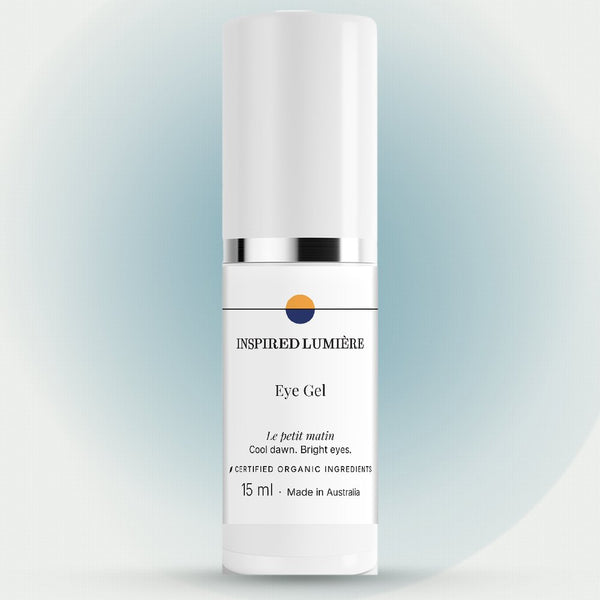
Ours is the Lumière Eye Gel.
This article is general information, not personal advice. If you have a skin condition or take prescribed medication, talk to your GP or dermatologist.